AI Trends 2027: 7 Developments for Business
Artificial intelligence will not simply get bigger in 2027. It [...]


Artificial intelligence will not simply get bigger in 2027. It will become more capable of
taking action, more local, and more deeply embedded in real business processes. The decisive
question is therefore not which technology appears completely new, but which development
makes the leap from an impressive demonstration to dependable everyday use.
In 2026, AI agents could already operate websites and software, conduct phone conversations,
inspect code, and complete their first multi-step tasks. At the same time, the limits of the
hype became clear: agents still make mistakes, enterprise data is often poorly prepared, and
unrestricted autonomy remains a security risk. The most important AI trends of 2027 emerge
from precisely this tension.
Agent vs. agent: Cybersecurity becomes semi-autonomous
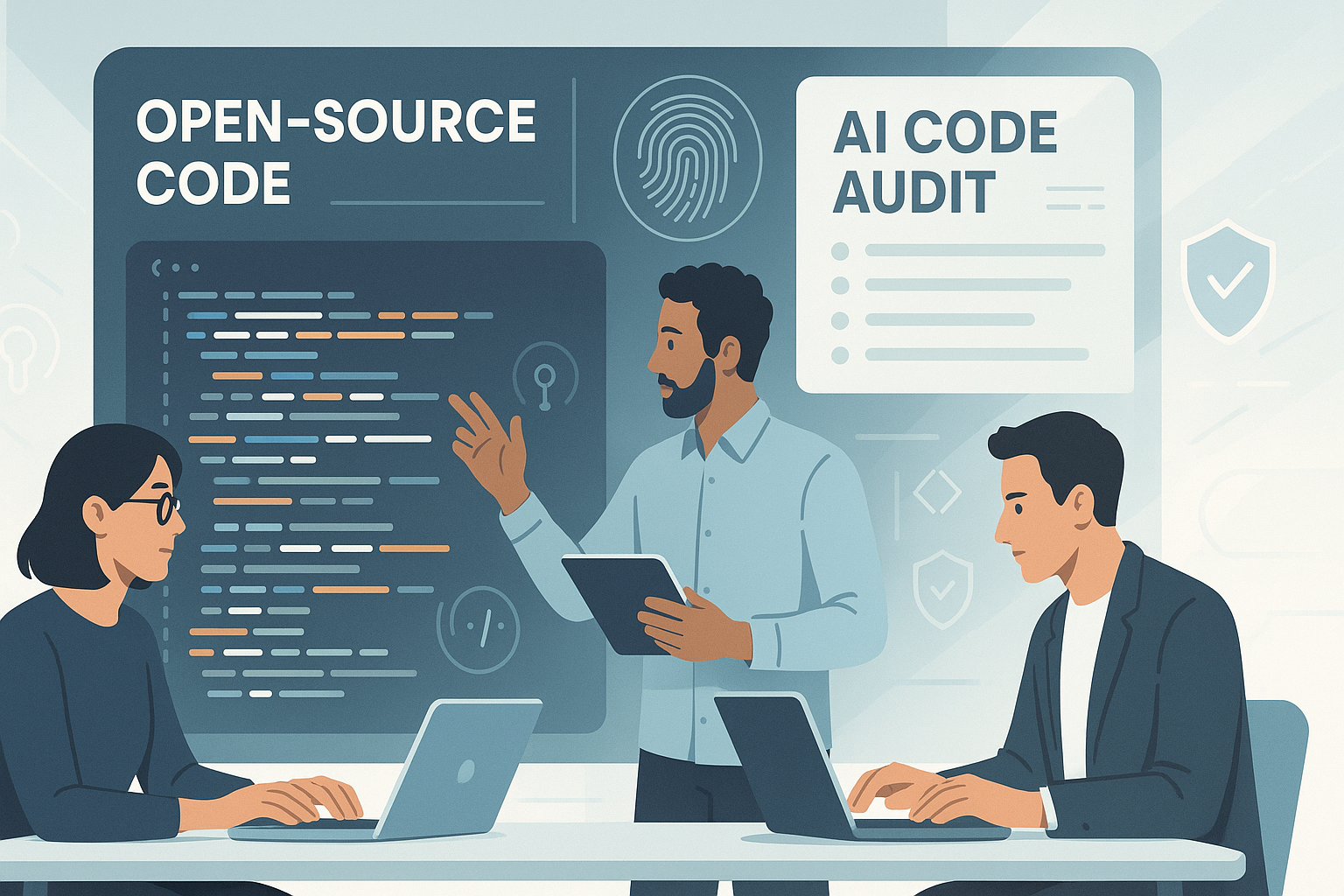
AI in cybersecurity is not new. What is new is that systems are no longer limited to
summarizing alerts. They can conduct investigations, validate vulnerabilities, and prepare
limited countermeasures. Attackers are using the same capabilities for reconnaissance,
exploit discovery, and parallel campaigns. In 2027, this is likely to become a race at
machine speed.
The likely winner will not be the most autonomous cyber agent, but the best-controlled one:
fast enough to respond to an attack, yet constrained whenever an action is irreversible.
Where we are in 2026
Agents prioritize alerts, search for traces of attacks, create threat models, and inspect code in isolated environments.
The 2027 inflection point
Constrained agents can lock accounts, isolate systems, or prepare verifiable patches according to predefined policies.
Real-world examples
Google Security Operations, Codex Security, and documented attacker use of multi-agent systems illustrate both sides of the trend.
Google says its Triage and Investigation Agent has already examined more than five million
alerts and reduced a typical 30-minute analysis to roughly 60 seconds. Codex Security
combines a project-specific threat model with sandbox validation and proposed patches. On
the offensive side, Anthropic documented cyber operations in 2026 in which multi-agent
systems orchestrated reconnaissance, exploitation, and data exfiltration, while humans
continued to select targets and make critical decisions. These metrics and case studies
come from the vendors themselves, but they point in a clear direction.
Examples and sources:
Google Security Operations,
OpenAI Codex Security,
Anthropic Threat Intelligence Report,
International AI Safety Report 2026.
From assistant to action-taking agent
Browser use, computer use, voice agents, AI avatars, and personal super-assistants are not
five independent trends. They are different layers of the same development. Browser and
computer control provide the hands, voice and avatars provide the interface, and memory and
planning provide continuity. The real trend is an agent that does not merely answer
questions, but completes tasks across multiple applications.
The traditional Turing test is not particularly useful for evaluating this shift. A system
can sound human while making the wrong decisions. Stanford reports 66.3 percent accuracy on
OSWorld, a benchmark for computer tasks—a major improvement, but still approximately one
failure in every three attempts. The key issue for 2027 is therefore not perfect human
imitation, but dependable execution with verifiable intermediate steps.
Where we are in 2026
Agents operate websites and apps, create files, conduct voice conversations, and remain active during longer projects.
The 2027 inflection point
They execute recurring end-to-end workflows and request approval only at defined risk or decision points.
Real-world examples
ChatGPT Work acts across apps and files; avatarin deployed a multilingual voice sales agent for Yamada Denki.
According to the published case study, approximately 30,000 people used the Yamada Denki
shopping agent over two weeks, and 92 percent of submitted survey responses were positive.
The technically interesting part is not the avatar itself, but the combination of real-time
voice, retrieval-augmented generation (RAG) for product information, and clear conversational
guardrails. Meta is pursuing a different architecture with Muse: a dedicated virtual
machine, a separate browser, and individually approved access. Isolation concepts such as
these are likely to matter more for personal agents than a particularly human-looking face.
Examples and sources:
OpenAI ChatGPT Work,
avatarin and Yamada Denki,
Meta Muse,
Stanford AI Index 2026.
The corporate AI stack matters more than a “corporate LLM”
“Corporate LLM” is an understandable term, but it can create the wrong impression. Most
companies will not train a large foundation model from scratch in 2027. What they need is a
controlled AI layer that connects different models with proprietary data, permissions,
policies, tools, and quality controls. The value is not located in the model alone, but in
the business context surrounding it.
The better question is not “Which LLM do we own?” but “Which data, processes, access
controls, and evaluations do we control?”
SAP
SAP says 110,000 of its own employees use Joule Work. A knowledge graph maps more than seven million data fields and relationships, while SAP reports productivity gains of 20 percent in selected functions.
Siemens
The Engineering Agent connects to TIA Portal, plans tasks, generates automation code, and validates the results against technical requirements.
Mercedes-Benz
Direct Chat gives employees access to several models, including models from OpenAI and Google Gemini. It is a practical example of multi-model access rather than dependence on a single model.
Bosch and Deutsche Telekom
Bosch combines partner models with smaller specialist models. Deutsche Telekom offers more than 30 models through one API and provides sovereign options for sensitive data.
Enterprise AI is therefore becoming an operating platform of its own. A model gateway
selects a suitable model according to task, cost, latency, and data classification. RAG
grounds responses in approved documents and structured data. Hybrid search combines
keyword and vector search, while a knowledge graph represents business relationships
between customers, contracts, products, and processes. An agent runtime exposes tightly
defined tools. IAM, DLP, guardrails, evaluation, and observability form the control layer.
In practice, an organization should not begin with “We need a company LLM,” but with a
measurable process problem. A read-only use case with a limited data set and source
citations is usually a good first step. RAG is generally the starting point; fine-tuning
becomes worthwhile only when terminology, output formatting, or recurring domain behavior
remains insufficiently stable despite good data access. Small models suit classification,
extraction, and routing, while large models should be reserved for tasks where their added
capability produces measurable value.
Examples and sources:
SAP Autonomous Enterprise,
Siemens Engineering Agent,
Mercedes-Benz Direct Chat,
Bosch customer service,
Deutsche Telekom LLM Serving.
AI goes real time: Small models, edge AI, and specialized chips
Fast inference is not simply another term for small language models. SLMs are an important
component, but speed comes from the interaction between the model, the runtime, and the
hardware. Quantization reduces memory and compute requirements, speculative decoding
generates several token candidates at once, KV caching avoids repeated computation, and
NPUs, GPUs, or ASICs execute the models efficiently.
In 2026, Apple introduced a three-billion-parameter dense on-device model as well as a
sparse 20-billion-parameter multimodal model that activates only one to four billion
parameters for each request. NVIDIA reported a 6.4-times shorter runtime than the selected
reference in one of its own MLPerf submissions on Jetson AGX Thor. The result is
vendor-specific, but it shows how quantization, multi-token prediction, and cache reuse can
work together.
Where we are in 2026
On-device models, NPUs, and optimized edge runtimes are available and can handle increasingly complex tasks.
The 2027 inflection point
AI runs continuously, responsively, and partly offline on PCs, vehicles, machines, and mobile devices.
The target architecture
Local models handle routine tasks; complex reasoning moves to a private or public cloud under controlled conditions.
Local execution can improve privacy, latency, and resilience, but it is not automatically
secure. An on-device agent still needs encrypted storage, clean permissions, signed updates,
and protection against manipulated inputs.
Examples and sources:
Apple Foundation Models,
NVIDIA TensorRT Edge-LLM,
Automotive and robotics examples.
The synthetic public sphere: When agents shape trends
AI-generated images, videos, and text will no longer be the real novelty in 2027. TikTok
reported more than 1.3 billion labeled AI videos by the end of 2025, while YouTube
introduced more prominent labels and automatic detection for realistic AI content in 2026.
The next step is to connect generation with autonomous optimization.
The potential hype loop is simple: detect a weak signal, generate variants, publish, respond,
measure engagement, optimize the narrative—and repeat.
This turns an AI-generated post into an agentic campaign. It affects legitimate marketing
as well as astroturfing, disinformation, and artificial popularity. A 2026 EACL study
examined seven million posts and interactions produced by 32,000 LLM agents on an
agent-based platform. The researchers found social influence, homophily, and polarization,
among other effects. This does not prove that autonomous agents will take over real social
platforms, but it does show that they can reproduce familiar social dynamics.
Where we are in 2026
Platforms label vast amounts of synthetic content, while creator and business bots handle their first interactions.
The 2027 inflection point
Agents combine social listening, production, publishing, dialogue, and optimization into a continuous system.
The countertrend
Proof of origin, agent disclosure, and a new premium on human-curated content become more important.
Examples and sources:
TikTok AIGC labeling,
YouTube AI labels,
EACL study on social LLM agents.
Who is authorized to act? Identity and trust for AI agents
As soon as agents send emails, modify files, deploy software, or spend money, a new security
question arises: Is the right agent acting on behalf of the right person, with the right
permissions and only for the intended purpose? A conventional user login is not sufficient.
Agents need their own technical identities, limited authority, and a verifiable history of
their actions.
NIST has been working on concepts for identifying, authenticating, authorizing, and auditing
software agents since 2026. After receiving more than 600 comments, it selected DevSecOps as
the first implementation use case. In parallel, C2PA is extending Content Credentials with
machine-readable information about the model used and the degree of human oversight.
Payment systems are also adopting mandates that can cryptographically record purpose,
merchants, amounts, and expiry times.
Agent identity
It establishes which system is acting, who commissioned it, which tools it may use, and when its authority expires.
Content provenance
It documents the origin and editing history of content. Crucially, proof of origin is not proof of truth.
Examples and sources:
NIST agent identity project,
C2PA 2.4,
Google guide to MCP, A2A, UCP, and AP2.
Physical AI: Factories first, living rooms later
Caution is warranted when discussing robotics. The Stanford AI Index 2026 reports a success
rate of only about 12 percent for real household tasks, compared with 89.4 percent for
robotic manipulation in controlled simulations. The gap between the laboratory and everyday
life therefore remains substantial. A broad breakthrough for household robots appears more
plausible in 2028 or later than in 2027.
Physical AI is already becoming tangible in structured industrial environments. BMW says
that Figure 02 supported the production of more than 30,000 BMW X3 vehicles during a
ten-month pilot in Spartanburg, moved more than 90,000 components, and completed around
1,250 operating hours. A further pilot began in Leipzig in 2026. This is not universal
robotic labor, but it is a credible indication of where the market may scale first: tightly
defined, repetitive, and physically demanding tasks.
Realistic for 2027
More productive pilots in manufacturing, logistics, laboratories, and quality inspection.
Not yet realistic
A universal household robot that can reliably master unfamiliar environments and long chains of tasks.
The critical requirement
Physical safety logic must remain outside the language or vision-language-action model.
Examples and sources:
BMW Physical AI,
Stanford AI Index 2026,
Google DeepMind Robotics model card.
What organizations should do now: A 90-day roadmap
No organization needs to implement all seven trends at once. A sensible start consists of
one clearly defined process, verifiable data, and constrained permissions.
Days 1–30: Select
Choose a process with measurable handling time, error rate, or resolution rate. Identify the data sources, owners, and access permissions.
Days 31–60: Validate
Build a read-only prototype with RAG and citations. Create a golden dataset of real questions, cases, and expected outcomes.
Days 61–90: Limited production
Start with a small user group, monitor cost and quality, and permit only low-risk actions. Test approvals, logging, and rollback.
The most important architectural principle is simple: business logic, permissions, and
safety rules must not live exclusively in a prompt. They need to be anchored in verifiable
software, identities, policies, and tests.
2027 will be the year of governed action
The most visible change may not be a new, larger model. It will occur when AI gains access
to tools, enterprise knowledge, devices, budgets, and real processes. The central question
will therefore shift from “What can the model say?” to “What is the system allowed to do,
and how can the result be verified?”
The corporate AI stack is especially important for businesses because it connects suitable
models with approved data, domain context, identities, evaluations, and tightly constrained
actions. Agentic cybersecurity, local real-time AI, and new trust standards are not separate
side issues. They are the components that make enterprise AI ready for production.
Frequently asked questions about the AI trends of 2027
Is a corporate LLM a language model trained by the company itself?
Usually not. A corporate AI stack is generally more useful: it connects different models with proprietary data, permissions, tools, and quality controls. Training a foundation model from scratch makes sense only in a small number of highly capital- and data-intensive cases.
Are fast inference and SLMs the same thing?
No. Small models help, but quantization, distillation, caching, speculative decoding, optimized runtimes, and specialized chips also determine speed, cost, and energy consumption.
What is the difference between an AI agent and a chatbot?
A chatbot primarily generates responses. An agent plans several steps, uses tools, processes intermediate results, and can execute actions in other systems within defined permissions.
Should cyber agents operate completely autonomously in 2027?
Usually not. Analysis and low-risk standard actions can be automated, but critical changes should be constrained by deterministic playbooks, approvals, sandboxes, audit logs, and rollback.
Is local AI automatically more private?
Local processing can reduce data transfer, but it does not automatically guarantee security. Device protection, encryption, permissions, secure updates, and a controlled cloud fallback remain necessary.
Will humanoid robots arrive in everyday life in 2027?
General-purpose household robots are unlikely to become widespread in 2027. Limited productive use in manufacturing, logistics, laboratories, and other controlled environments is more realistic.
Why are developments from 2026 considered trends for 2027?
A trend rarely begins on January 1. The inflection point is what matters: many technologies became visible as products or pilots in 2026, while 2027 may bring the transition to controlled, measurable, and broader deployment.
Transparency note: This article is a forecast based on information available
on October 25, 2026. Some performance and usage figures come from official corporate
publications and should therefore be treated as vendor-reported data.
October 25, 2026
October 25, 2026